
Ontario Resident Lookup Coverage
The records available for an Ontario resident lookup are split among county, city, state, federal, and library custodians. Start with the record type that can answer the narrow question. A parcel can show a person or entity tied to an assessment record. A deed can show a party role and transaction date. A court docket can show a case event. A vital record can establish an event or relationship when the requester qualifies. A business or professional file shows an affiliation, not necessarily a home.
| Record | What it confirms | Where | Access boundary |
|---|---|---|---|
| Assessment parcel | APN, situs, property facts, possible mailing clue | County PIMS | Current assessment; not proof of occupancy or title |
| Recorded document | Party role, date, title, legal property link | ARC Recorder Index | 1925-present public index; image by copy or office |
| Court docket | Party role, case type, events, status or disposition | San Bernardino CAP | Older data and sensitive files may be limited |
| Vital record | Birth, death, marriage, or relationship event | ARC or CDPH | Copy eligibility and type control release |
| Business or license file | Entity, agent, credential, status, discipline | SOS or DCA | Address of record is not residence |
| History collection | Past address, school, occupation, obituary or biography clue | Ontario History Room | Edition, index, and staff access vary |
Choose the route by the clue. An old classmate points to yearbooks and newspapers. An heir question points to probate and vital records. A known address starts with PIMS. A business name starts with the Secretary of State. This keeps a resident lookup focused and prevents a source from being asked to reveal facts it does not hold.
Build a Two-Source Ontario Resident Match
Same-name errors are the first risk in an Ontario resident lookup. Build a comparison grid with the exact spelling, reversed order, middle initial, diacritics, approximate age, city, known associates, APN, case number, business number, license number, and dates. Search the person's name in every relevant role, then require two independent records before treating two hits as one person.
A deed party may be a trust, company, grantor, grantee, secured party, or representative. A court party may be a plaintiff, petitioner, defendant, respondent, decedent, or attorney. A business agent address may be a commercial office. A professional license may show a public address and discipline history but not a personal residence. Role and date are as important as the name itself.
| Comparison point | Why it matters |
|---|---|
| Name variant | Initials, compound surnames, diacritics, and order can change a hit |
| Time | A record date may place a person before or after the relevant event |
| Role | Party, owner, agent, applicant, or licensee are not interchangeable |
| Independent anchor | APN, case number, school year, relationship, or official number helps separate people |
Check Ontario Resident Property Records
For an address clue, search San Bernardino County PIMS by property address or APN. The result can supply situs, property type, tax-rate area, assessed land and improvement values, year built, and a map link. Owner or mailing information may be suppressed. Preserve the difference between situs and mailing address: situs is the physical parcel; mailing is where correspondence goes.
Next, use GIS to confirm the parcel shape and jurisdiction, then search the recorder by a likely current party name. An assessment record is not a legal title opinion. A deed proves a recorded transfer or interest, not current occupancy. A matching mailing and situs address is only a weak supporting clue. Household members, unlisted occupants, and protected people may not appear.
The county property-information system is the proper starting point for an address-based resident lookup. The full street-by-street parcel method is reserved for Ontario by-street research.
Read an Ontario Resident's Recorded Role
The ARC Public Official Records index is name-keyed. Search a likely party as grantor and grantee, try spelling variants, and narrow by recording date and title. The public catalog can show document number, document date, title, grantors, grantees, and sometimes book or page references. It does not display the document image on the open web index.
Read or order the instrument before treating the index as proof. The document may contain a legal description, vesting, release, easement, lien, deed of trust, or reconveyance that changes the meaning of the name hit. The recorder's public page states 1925-present, while a separate county guide describes computerized access from 1958 and pre-1958 microfilm. Call 909-387-8306 before relying on one cutoff for an older Ontario record.
- Index
- A catalog entry that points to a record and its parties.
- Image
- The scanned or paper instrument containing the legal terms.
- Certified copy
- A custodian-issued copy with a certification that may be needed for a formal use.
Search Ontario Resident Cases by Party
The San Bernardino Court Access Portal is the county's central online case path for Ontario matters. Search by case number when known, or use party-name fields with first, middle, last, date range, case type, and court location as the mode permits. Try reversed names and middle initials. A court hit confirms a party and case event, not a current address or character judgment.
| CAP field or control | Type and note |
|---|---|
| Case Number | Text; the most precise search key |
| Party Name | Text; search person or business and name variants |
| First, Middle, Last | Name fields; middle initial can separate common names |
| Date of Birth | Criminal-mode dependent or restricted |
| Case Type or Category | Selection; civil, criminal, family, probate, small claims, traffic, and supported categories |
| Filing Date and Court Location | Date fields and county-court selection |
| Search, Reset, Accept | Controls; terms acceptance precedes use |
A typical docket result can show case number, caption, party roles, filing date, category, location, status, register-of-actions events, hearing dates, and dispositions or judgments where entered. Pre-1998 information may be limited. Civil documents allowed for remote access are listed at $0.50 per page. Confidential, sealed, juvenile, adoption, family, and other sensitive records may require courthouse access or legal authorization.
The Court Access Portal search screen is the direct interface captured for this resident lookup.
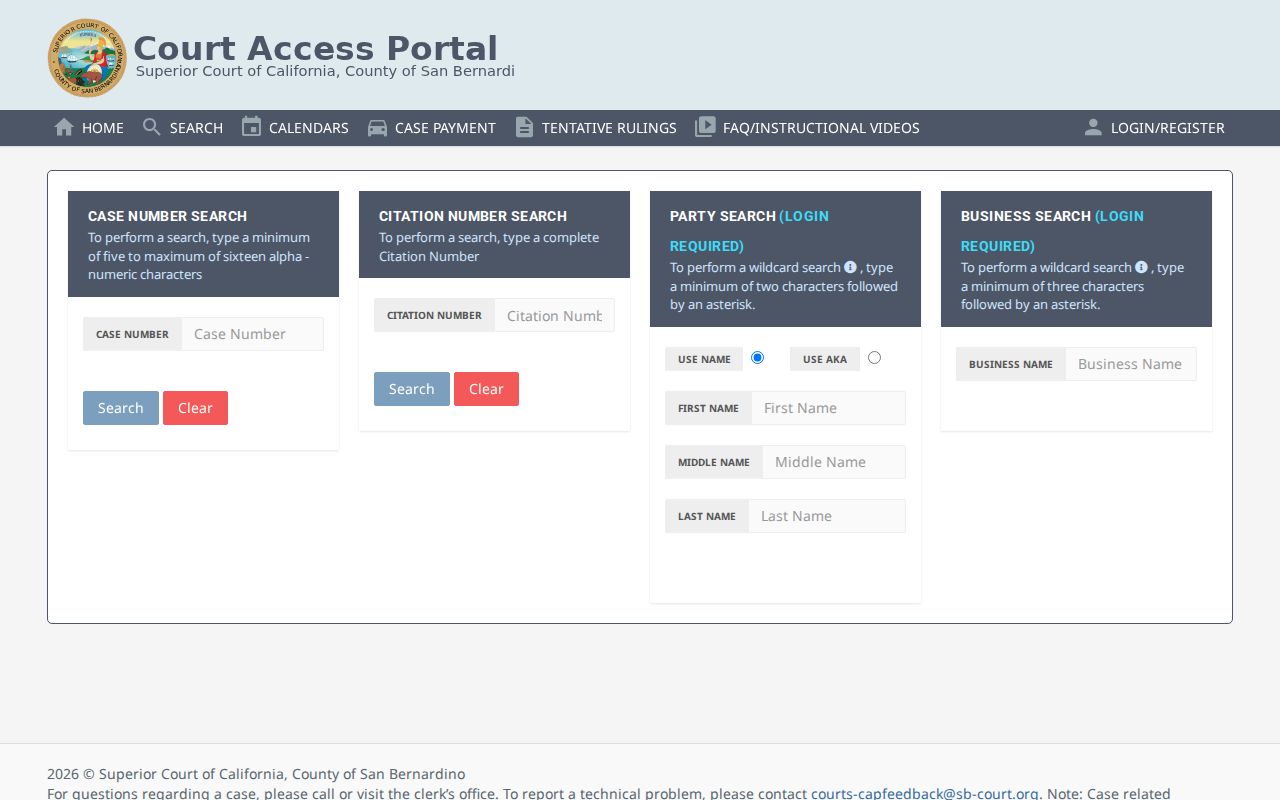
The county search form is most useful after a name has been anchored to a date, role, or other local clue.
Ontario Vital Records Need the Right Copy
California does not use one simple rule that opens every birth, death, marriage, or divorce record after a set number of years. County ARC is usually the practical route for a known San Bernardino County event. CDPH can help when the county is uncertain. The requester must choose an authorized certified copy or an informational certified copy, then meet the rule for that record.
| Record | Rule | 2026 CDPH fee |
|---|---|---|
| Birth | Authorized copy for an eligible requester; informational copy otherwise | $31 |
| Death | Authorized access is limited; informational copy generally available | $26 |
| Public marriage | Public certified-copy route; confidential marriage differs | $19 |
| Confidential marriage | Party or court-authorized request under Family Code section 509 | $19 where available |
| Divorce | CDPH certificate for supported years; Superior Court holds the decree | $18 |
Authorized birth and death requests require a sworn statement and an eligible relationship or category under Health and Safety Code sections 103526 and 103526.5. Mail requests generally need notarization. Informational copies are marked so they cannot be used as identity documents. Adoption records and original birth records are sealed except through statutory or court routes. The fee is retained as a search fee when no record is found.
California Vital Records applications list the current forms and ordering routes, while the CDPH fee table supports the published 2026 amounts. The form's live instructions should control instead of a fixed processing promise.
Ontario Resident Business and License Trails
A person may appear in Ontario records through an entity, fictitious business name, permit, professional license, or court representation. California bizfile Online can return entity name or number, type, status, jurisdiction, filing date, principal or mailing address, agent for service, and filed documents where available. County FBN material connects a trade name to a registrant. DCA's license search can show license type, number, status, issue or expiration dates, public address, and discipline where the board releases it.
These are affiliation trails. An agent or principal address can be an office. A contractor on a permit can be hired for a property. A professional address is an address of record. Compare the business or license result with a dated deed, court role, or library source before assuming a personal connection.
| Register | Useful public clue | Limit |
|---|---|---|
| SOS bizfile | Entity, agent, filing history, address | Agent address may be commercial |
| County FBN | Registrant and trade name | Does not create exclusive trademark rights |
| DCA | License status, dates, board, discipline | Board fields and disclosure vary |
| City permit | Applicant, contractor, work, parcel | Project participant is not necessarily resident |
Find Ontario Resident Trails
Specific human-use trails need a different sequence from a broad resident lookup. For an heir, begin with the decedent's death clue, locate a probate docket, identify the petitioner, will, notices, or heirs where the file is public, and then verify each address or relationship through an independent source. A probate file may be courthouse-only or limited by access rules.
For a former classmate, the Model Colony History Room's Chaffey, Ontario, and Colony yearbooks are a better first lead than a broad name search. Pair the school year with the newspaper index, a city directory, or a current professional or business record. For an adoption or birth-parent inquiry, use California's official adoption-information and consent routes; sealed records are not opened by a casual search.
Obituaries and cemetery memorials can point toward a death certificate or probate file, but they are secondary leads. The custodian's record is the endpoint.
The San Bernardino civil case-information page explains the county's document-sales and remote-access path.
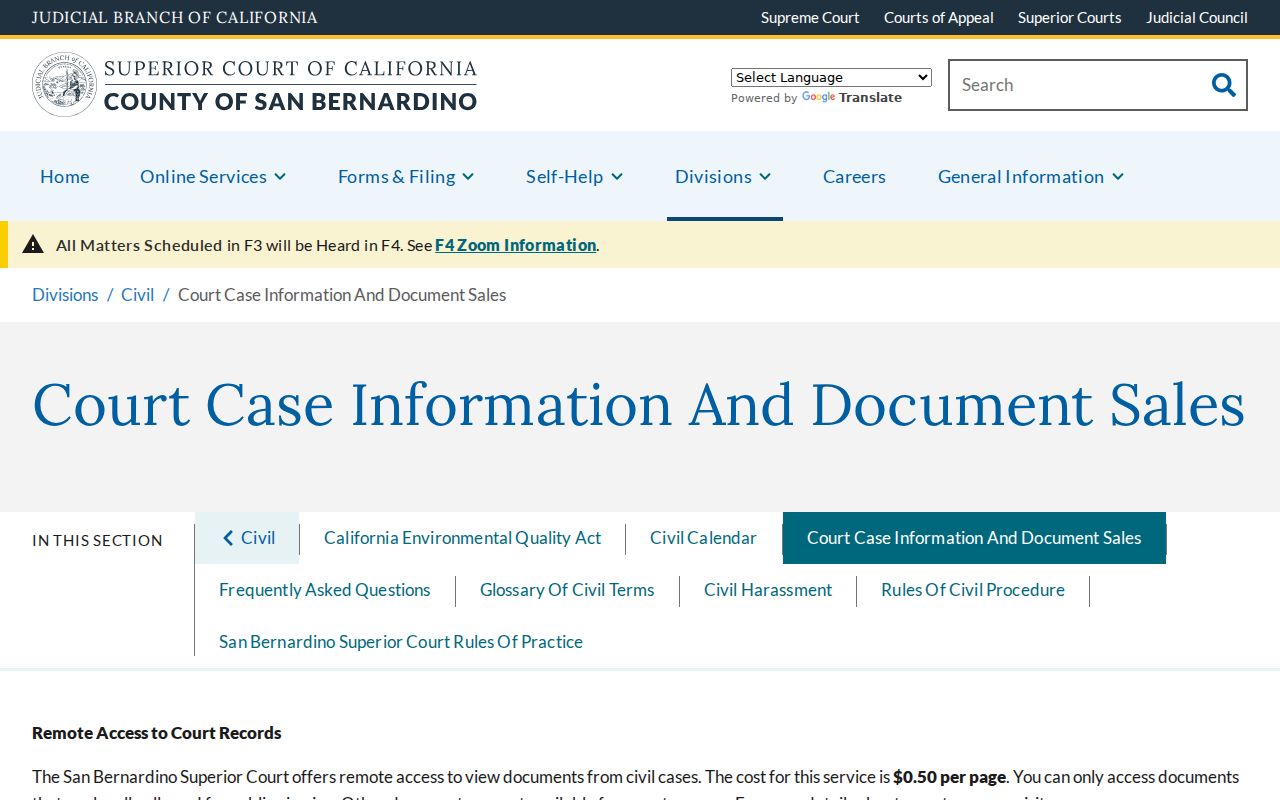
The county civil information page illustrates the difference between a searchable index and documents that must be purchased or viewed under court rules.
Ontario Federal Resident Records
San Bernardino County court searches do not cover federal trial cases. For a name that may appear in a federal civil, bankruptcy, or criminal matter, use the PACER Case Locator or the Central District of California court route. PACER searches by party, case number, and court after registration. Research notes describe a $0.10-per-page charge with a 30-page cap per document and a quarterly waiver threshold of $30 or less, but the live PACER fee page should control at the time of use.
A federal docket can connect a party to a case number, filing date, court, role, and public event history. Personal identifiers remain subject to redaction. A federal case is a legal-record clue, not proof that a person lived in Ontario.
PACER's official site is the separate federal search path.
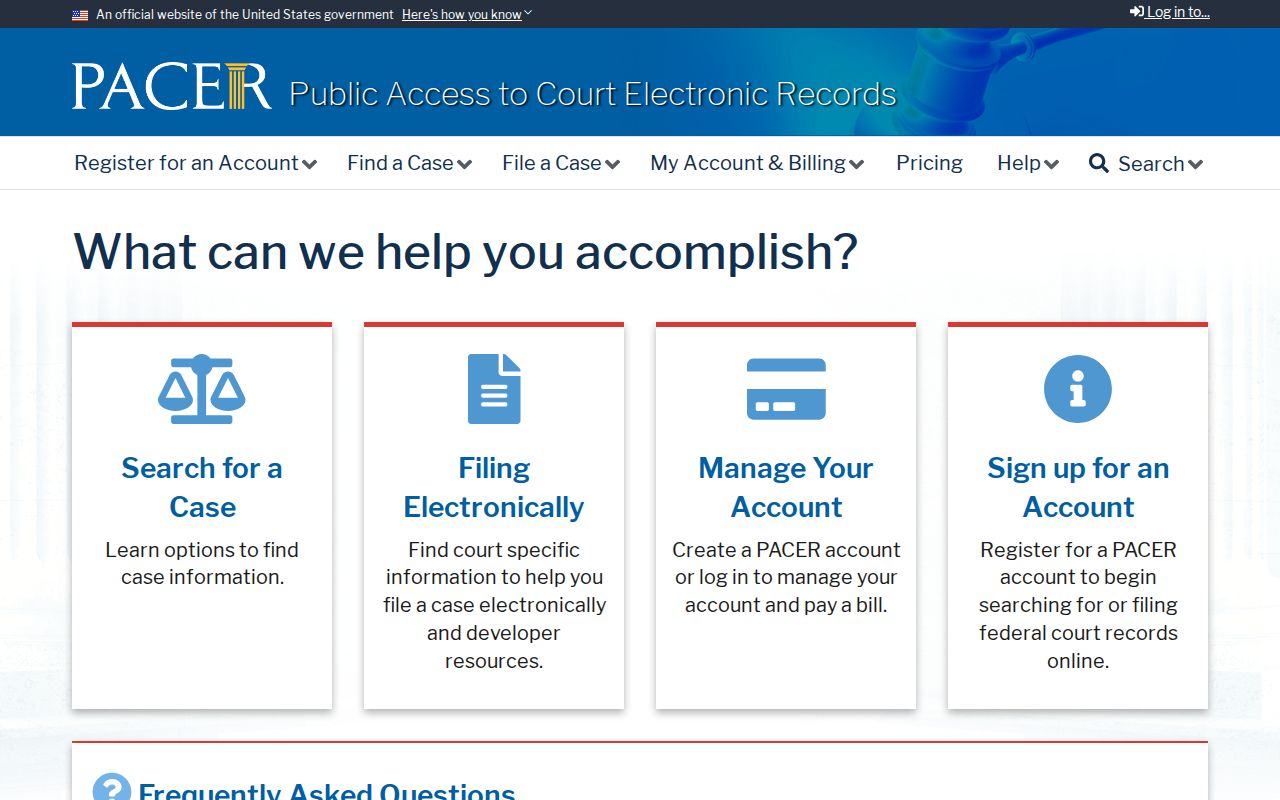
The federal locator screen belongs in the workflow only when the county court route does not cover the suspected matter.
Verify One Ontario Resident in Steps
Use a short, repeatable chain when a name needs confirmation. The goal is not to collect every possible fact. It is to anchor the person to a date and record role, then stop when the official source cannot lawfully reveal more.
- Record the exact name, variants, known city, date range, and the reason the search began.
- Use PIMS or a public affiliation file for an initial anchor, while keeping an address of record separate from residence.
- Search the county court portal by party and inspect the case number, role, filing date, and case type.
- Use a vital index or library source to test age, relationship, school, or event details without assuming copy eligibility.
- Order a certified copy only from the responsible custodian when the record type and requester status permit it.
Keep the source URL, search date, result identifier, and access limitation in the notes. That record makes a later correction possible and reduces the chance that a similar name will be carried forward as fact.
Privacy Boundaries for a Resident Lookup
California voter data is confidential except for limited statutory purposes. Safe at Home supplies a substitute mailing address for qualifying survivors and specified public participants. Recorded-document identifiers can be redacted, and California Government Code section 6254.21 restricts Internet posting of designated officials' home addresses and phones after a qualifying demand. DMV information is protected by the federal Driver's Privacy Protection Act.
The California Consumer Privacy Act guidance explains rights concerning covered business data. The state's DROP platform supports deletion requests to registered data brokers. Those rights concern covered business data, not an automatic deletion of a county deed, court file, voter record, or library volume. A correction or suppression request goes to the custodian that controls the record.
California court access guidance explains why a record may be public at a courthouse but absent from remote viewing.
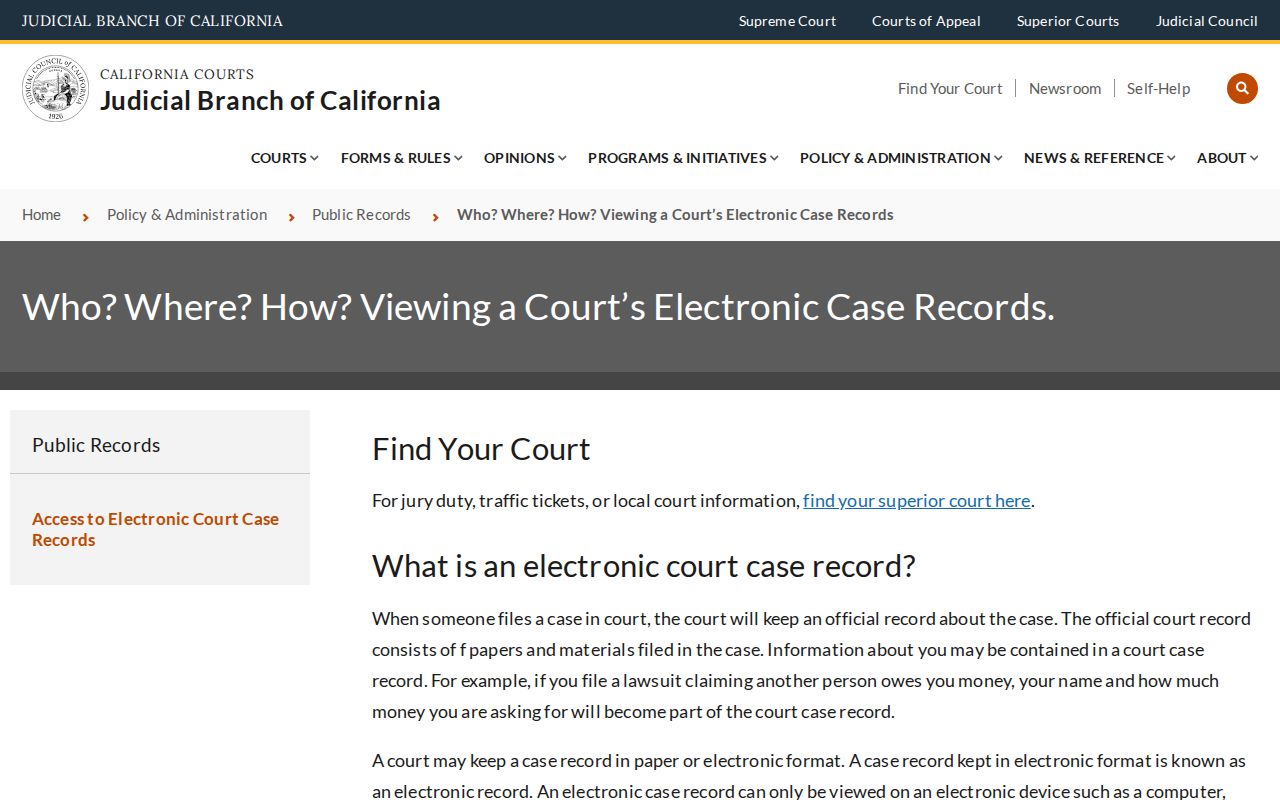
The court-access guidance image marks the practical boundary between a public index, a courthouse terminal, and a protected file.
Lawful use. An Ontario resident lookup is for personal, lawful research and family or civic purposes. Do not use a record to stalk, harass, intimidate, expose, or harm another person.