
Ontario Previous Residents by Era
The trail for previous residents changes as records move from online indexes to counters, shelves, and historical maps. This coverage table keeps the expected date range and contribution of each source visible. Exact directory years are not fully published by the library, so the local title list must be confirmed before a visit.
| Source | Ontario coverage | Where held | What it shows |
|---|---|---|---|
| Recorder online index | 1925-present on public page; guide conflict for computerized cutoff | ARC self-service and office | Transfer parties, title, date, document number |
| Earlier deed books and indexes | Before the web cutoff; exact beginning depends on series | Recorder, County Archives, microfilm | Earlier chain of title and legal description |
| Ontario and reverse directories | 1898, 1901, 1903, 1907, 1909-10, 1911, 1928, 1931 references; later run not fully published | Model Colony History Room | Named occupant, occupation, street, business |
| Federal census | Decennial schedules through 1950 | NARA, library, genealogy databases | Household, age, birthplace, occupation, enumeration clue |
| Sanborn atlas | January 1907, 17 sheets | Library of Congress | Street number, footprint, use, materials, context |
| Building surveys and permits | Survey collection; permit coverage not stated | History Room and City Building | Construction, alteration, applicant, contractor |
| Newspapers, obituary, probate | Local span; exact newspaper coverage not stated | History Room and Superior Court | Moves, deaths, estates, notices, relationships |
Use a row as a research lead, not a promise of an online image. The deed chain and occupant chain often overlap for only one year, which is why a past-resident search needs multiple sources.
Start Ontario Previous-Resident Research
Do not begin a previous-residents search with an old surname. Begin with the current street address and search San Bernardino County PIMS. Save the APN, situs, property type, year built, map link, and any visible assessment facts. Keep the mailing address in a separate column. The APN is the bridge from a modern place to the recorder, GIS, permits, maps, and older legal descriptions.
Ontario's older north and central grid can be compared with the 1907 Sanborn atlas and historic directories. Southern Ontario Ranch parcels may begin in a subdivision or tract record rather than an old city directory. If an address does not match, test directional words, street suffixes, unit numbers, and a historic street form before deciding the property has no past.
The county property-research guide supplies the backward-title method and explains why the recorder's address limitation matters.
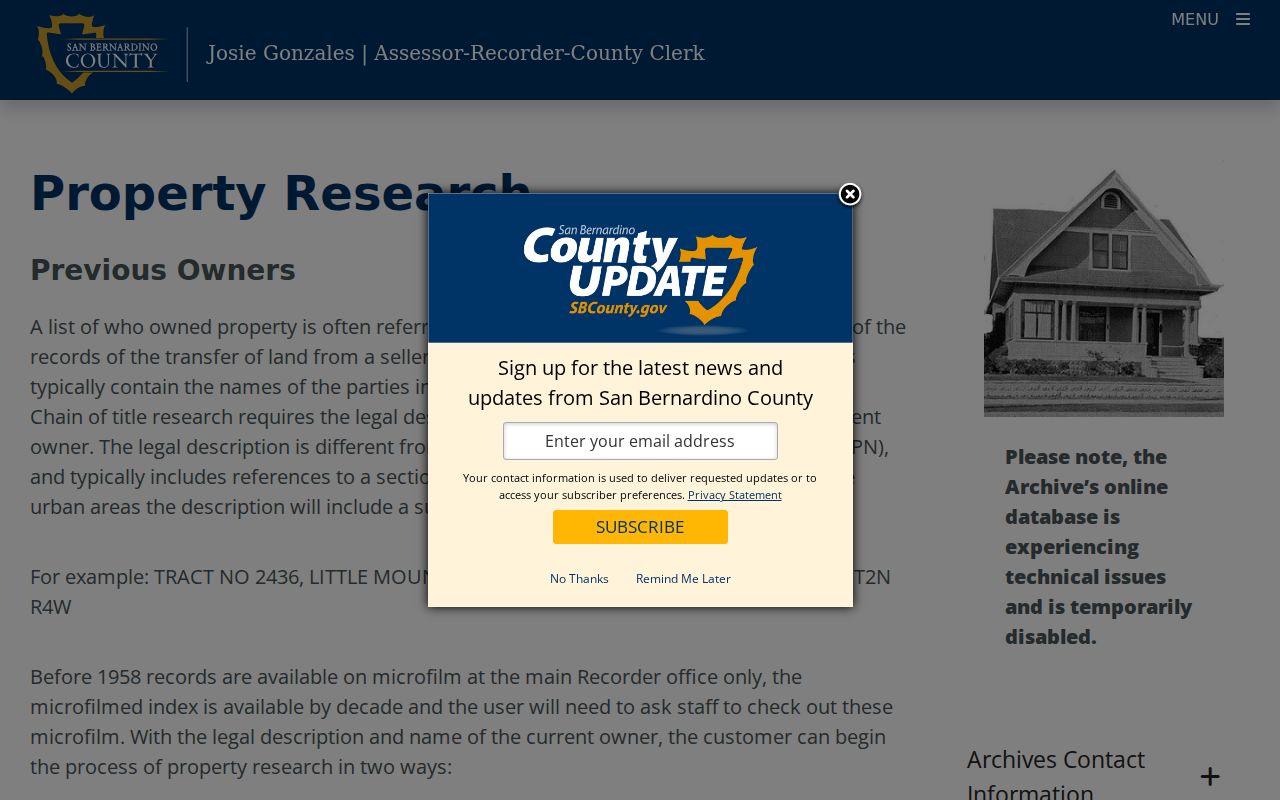
The property-research image shows the correct starting posture: establish the parcel before asking which names belonged to it.
Find Ontario Records for the Acquisition Deed
Once PIMS gives an owner or likely party, search the ARC recorder index for that person or entity as a grantee, then narrow by deed title and recording date. A grantee receives the recorded interest. Capture grantor, grantee, document number, recording date, title, book or page reference, and legal description. The index is a catalog, so do not treat the party line as the deed's full meaning.
The recorder's public page lists a 1925-present index and no public instrument image. A separate official guide describes computerized grantor-grantee access from 1958 and directs earlier work to decade-organized microfilm. That cutoff conflict must be checked with Recorder-Clerk Services at 909-387-8306. Copies are listed at $4 for the first page and $1.50 for each later page, with $1.50 for a certificate under seal. Card orders add 3.5 percent.
The official recorder index page is free to search. A copy or office inspection is needed for the legal terms, parties in context, and prior legal description.
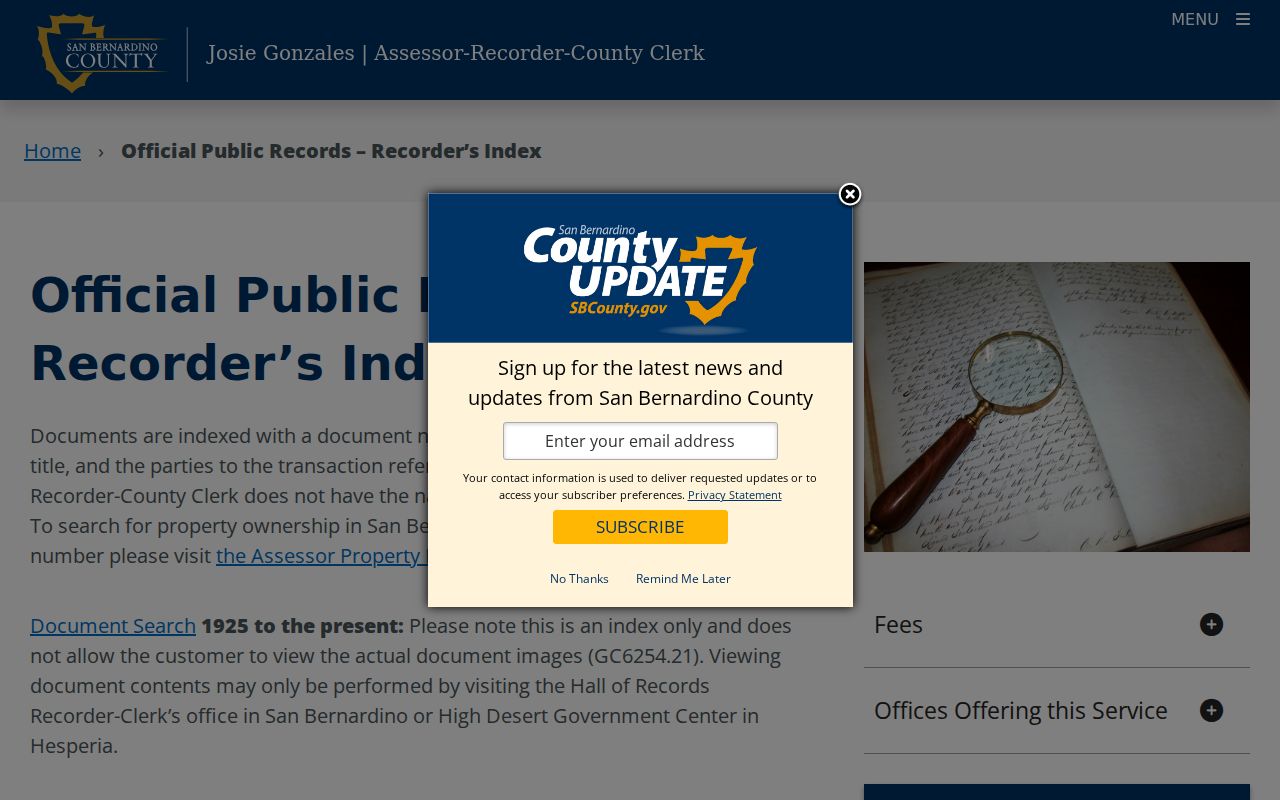
The recorder service screen is the handoff from a current parcel clue to an actual deed chain.
Walk Ontario's Previous-Resident Deed Chain
A chain of title is a linked series of recorded interests. It is not the same as a list of people who lived at the address. After reading the current acquisition deed, take its grantor and search that name as an earlier grantee. Repeat with the next instrument, checking the legal description and vesting each time. Trusts, companies, common names, estate transfers, and name changes make the image or paper copy important.
- Write the current APN, situs, legal description, and likely acquisition date at the top of the worksheet.
- Search the current party as grantee, then narrow by deed or related title and date.
- Read the instrument and record grantor, grantee, document number, recording date, and legal description.
- Search the grantor as an earlier grantee, using the description and parcel markers to test continuity.
- Stop and verify at the counter or archive when a cutoff, subdivision, trust, or conflicting description breaks the chain.
The recorder subscription program is a separate access path from the free public catalog. Its posted arrangement notes $125 setup plus $0.10 per image and $0.10 per index or title, with images batched after recording. That price structure should not be presented as a requirement for ordinary historical research.
Recorder subscription details explain the difference between subscriber image access and the public image-free index.
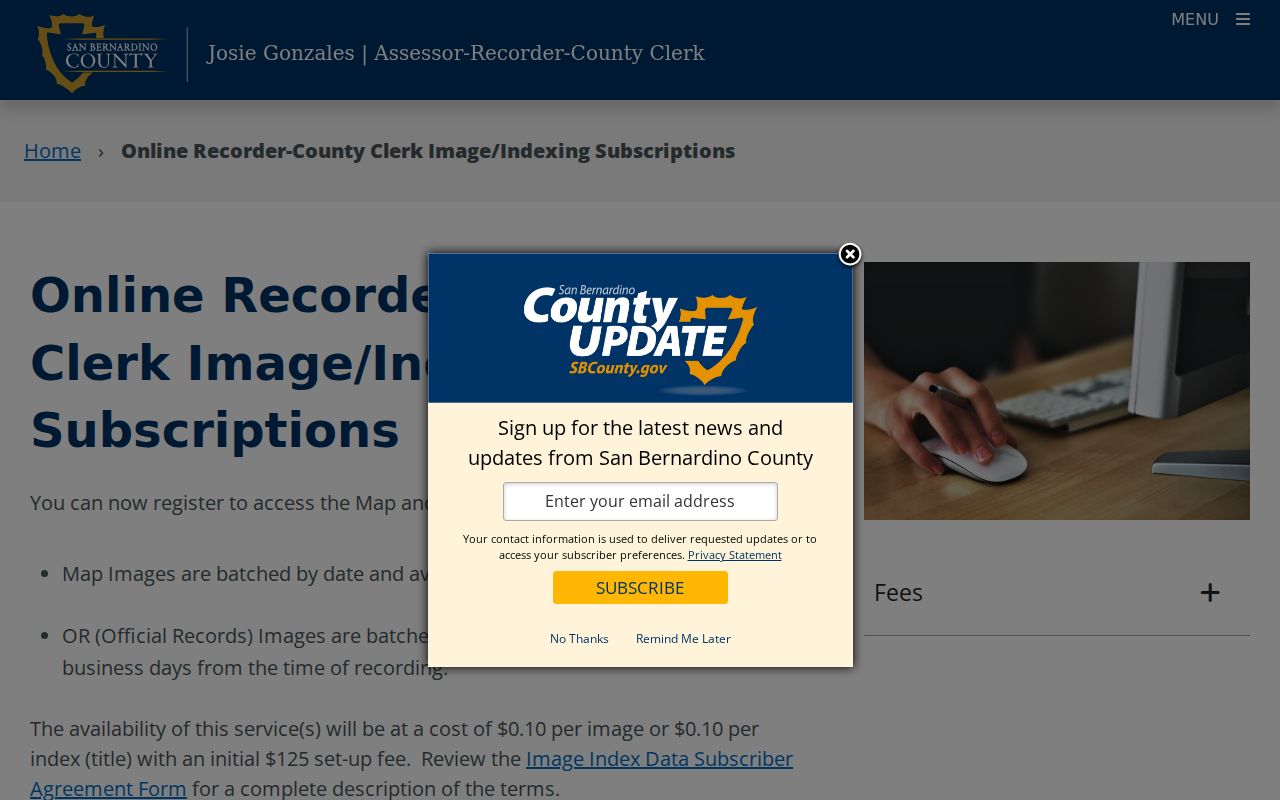
The subscription screen helps explain why an online result can be free while the underlying image remains a separate access product.
Continue Ontario Records Before 1925
Ontario previous residents before the public recorder cutoff require a fallback chain. Ask the main Recorder about decade-organized books or indexes, search the County Historical Archives catalog, and ask the Model Colony History Room whether a genealogy or local-history collection fills the gap. The research identifies pre-1958 microfilm in the county property guide, but the exact beginning of each series must be confirmed before publication.
For a city-held record not online, submit a narrow request for an identifiable existing document through the City of Ontario's portal. California's Public Records Act normally gives an agency 10 calendar days to determine whether records exist, with a possible written extension of up to 14 days for unusual circumstances. Inspection is generally free, while duplication or statutory electronic-extraction costs may apply.
The ARC public-records request route is the county fallback when a known record is not exposed online.
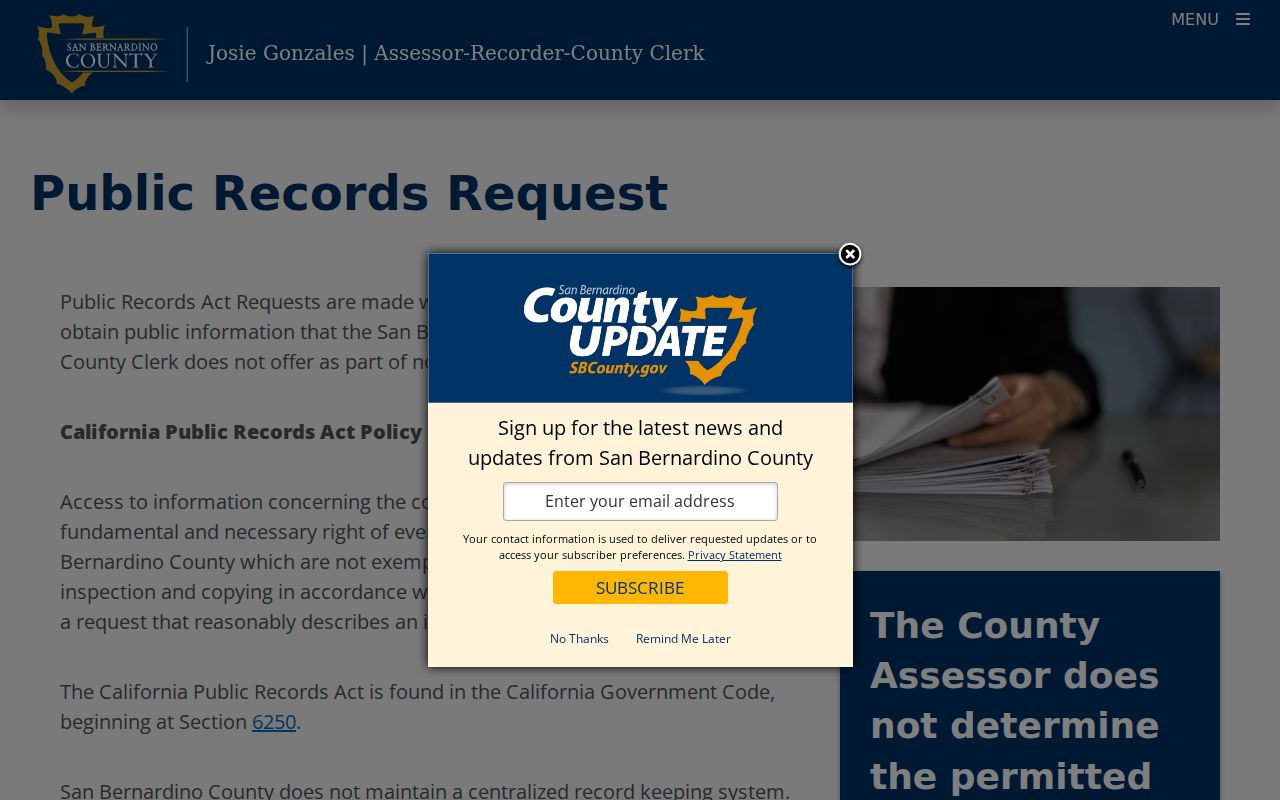
A request should identify the record, address, date range, department, and known identifier. It should not ask staff to create a new list of previous residents.
Separate Ontario Residents from Owners
Previous residents are usually found by combining two timelines. The owner chain follows deeds, liens, releases, maps, and legal descriptions. The occupant chain follows city directories, census schedules, newspapers, yearbooks, permits, and obituary or probate clues. A deed can show an owner who lived elsewhere. A directory can show an occupant who did not hold title. A permit can name an applicant or contractor.
Use the city directory shelf for consecutive editions, then pair a dated entry with the federal census, a newspaper notice, or a property document. Keep an “owner,” “occupant,” “business,” and “source date” column. This avoids turning a mailing address or business address into an unsupported residence claim.
The full historical collection list belongs on Ontario city directories. The present-day parcel chain belongs on the Ontario by-street directory. This page joins those layers only for one address moving backward through time.
Use Ontario Sanborn Records for Old Numbers
The January 1907 Ontario Sanborn atlas contains 17 sheets and can stabilize an old street number, footprint, building use, and surrounding road context. It cannot name every person. Place the sheet beside the directory street guide, tract map, deed legal description, and newspaper index. If the footprint and intersection line up, an old number becomes more reliable even when a modern address form is different.
Ontario's original Model Colony grid centered on Euclid Avenue, while later expansion moved south into agricultural and dairy land. A historic address can therefore sit in a record landscape that predates modern ZIPs, subdivisions, and city departments. The map is a place anchor across those changes.
The Library of Congress Sanborn atlas provides free images for the 1907 map set.
Pair Ontario Directories, Census, and Permits
The best previous-residents file is built from time slices. A directory gives a name and address for one edition. The census supplies a household snapshot near a decennial year. A permit or building survey dates construction and alteration. A newspaper can record a sale, death, arrival, club event, or business change. The sources do not need to agree in every field, but their dates and place should be explainable.
- Mark every directory year that names the address or a likely household member.
- Match each run to the nearest census schedule and record the enumeration geography.
- Check permit, survey, Sanborn, or tract evidence when the building or street form changes.
- Use newspapers, obituaries, and probate to explain a disappearance or relationship.
The latest public federal census is 1950 under the 72-year rule. Later gaps must be filled with the local library, deeds, municipal files, or records that lawfully disclose the needed event.
Ontario Previous Residents at the Library
The Model Colony History Room expressly offers help with historic Ontario houses. Its building survey collection, maps, aerials, photographs, directories, newspapers, and manuscript holdings can bridge a deed gap or explain an address change. Staff may also know which yearbook, family collection, or local business file is relevant when a name is missing from a printed directory.
The room is at 215 E. C Street and lists 909-395-2206 and LocalHistory@OntarioCA.gov. Posted hours are Monday through Wednesday 1 to 6, Thursday 1 to 9, and Friday 1 to 6. Off-site material needs a day's notice, collection and box numbers, and is retrieved up to four boxes at a time. Ask for the exact directory title and publisher before assuming a year is held.
Close Ontario Resident Records with Probate
Obituary and probate records can close the final gap in a previous-residents search, but each has a different strength. A newspaper notice may supply a death date, relatives, former address, or service detail. A probate docket may supply the decedent, petitioner, estate event, heirs, or devises where the file is public. The Superior Court may require courthouse access for documents or restrict sensitive material.
Use an obituary or cemetery memorial as a lead, then verify the death event or estate through the custodian. Do not treat an obituary's address as proof that every named relative lived there. Record the date, source, and relationship stated in the document.
Lawful use. A past-resident trail is appropriate for family history, property history, estate research, and civic understanding. Do not use old address information to stalk, harass, intimidate, expose, or harm anyone.