
How Ontario Residents Come Into Focus
A useful Ontario residents directory search begins by naming the question. The San Bernardino County Assessor-Recorder-Clerk keeps separate systems for parcels, recorded instruments, and clerk services. The Superior Court holds case files. California's Secretary of State supplies a personal voter-status check, while the Model Colony History Room preserves city directories, yearbooks, newspapers, and biography files. None of those sources is a complete household list. An assessment record can connect a person or entity to a parcel, but it does not prove who sleeps there. A voter lookup authenticates the requesting voter, not a stranger. A directory entry records a person at one publication date.
That distinction keeps the search useful. A current address clue calls for the county property system and a recorded document. A past household calls for directories, census schedules, newspapers, and deeds in the right order. A known name may be tested against court, vital, business, license, or probate records, with a second source used to avoid a same-name mistake.
- Write down the name or address exactly as known, including middle initials, unit details, and likely spelling variants.
- Use county property information to turn an address into an APN and keep the situs address separate from any tax mailing address.
- Check the relevant official index, such as a court party search, voter-status form, license search, or business filing search.
- Use the recorder's party index for a recorded link, then use the library's historical shelf when the question reaches into earlier years.
- For an identifiable record that is not online, send a narrow request to the custodian under the California Public Records Act.
Note: A failed hit may reflect a coverage rule or protected record, not proof that an Ontario resident never lived there.
Ontario's Records Offices by Role
The offices behind an Ontario residents directory are divided by record type. ARC combines assessor, recorder, and clerk duties at the county level. Its recorder index is a catalog of parties and documents, while PIMS is the assessment and address starting point. The county court controls civil, criminal, family, probate, and small-claims case access. The city keeps municipal files and accepts requests for existing records through its online portal. A researcher gets a cleaner result by sending each question to the office that actually holds the record.
ARC Recorder-Clerk
Hall of Records
222 W. Hospitality Lane
San Bernardino, CA 92415
909-387-8306
ARC Assessor Services
County parcel and assessment custodian
909-387-8307
San Bernardino Elections
Registrar of Voters
777 E. Rialto Avenue
San Bernardino, CA
Use the current county elections contact
Ontario municipal records start with the City Clerk and Records Management office. City Hall is at 303 East B Street, Ontario, California 91764. The city request portal asks for an existing record description rather than a request that staff create a new list. For older residents, the library is a fourth path, not a substitute for the county custodian.
From Ontario Residents to a County Parcel
Property Information Management System, or PIMS, is the practical first stop when the known clue is an Ontario address. The county's property information page accepts either an Assessor Parcel Number or a property address. Search the street number and name, then compare the returned situs with the address you started with. The APN is the bridge to the map, permits, tax account, and a recorder name search. It is a tax-map identifier, not a deed and not proof of occupancy.
| PIMS control | What it does | Search note |
|---|---|---|
| Assessor Parcel Number | Finds the county parcel record | Use county APN digits; test punctuation if needed |
| Property Address | Starts an address-to-parcel match | Try directional and street-suffix variants |
| Search | Opens the matching property report | Compare situs, parcel, and map details |
The parcel report may show situs, use or property type, tax-rate area, assessed land and improvement values, exemptions where publishable, year built, and map links. Online owner details can be suppressed. A mailing address is where tax correspondence goes. A situs address is where the parcel sits. The two can match, but that only supplies a clue about ownership and does not identify every household member.
The county ARC service page shows the office path that supports the parcel search and the recorder-clerk handoff. Review the county ARC service entry point before relying on a field that may have changed.
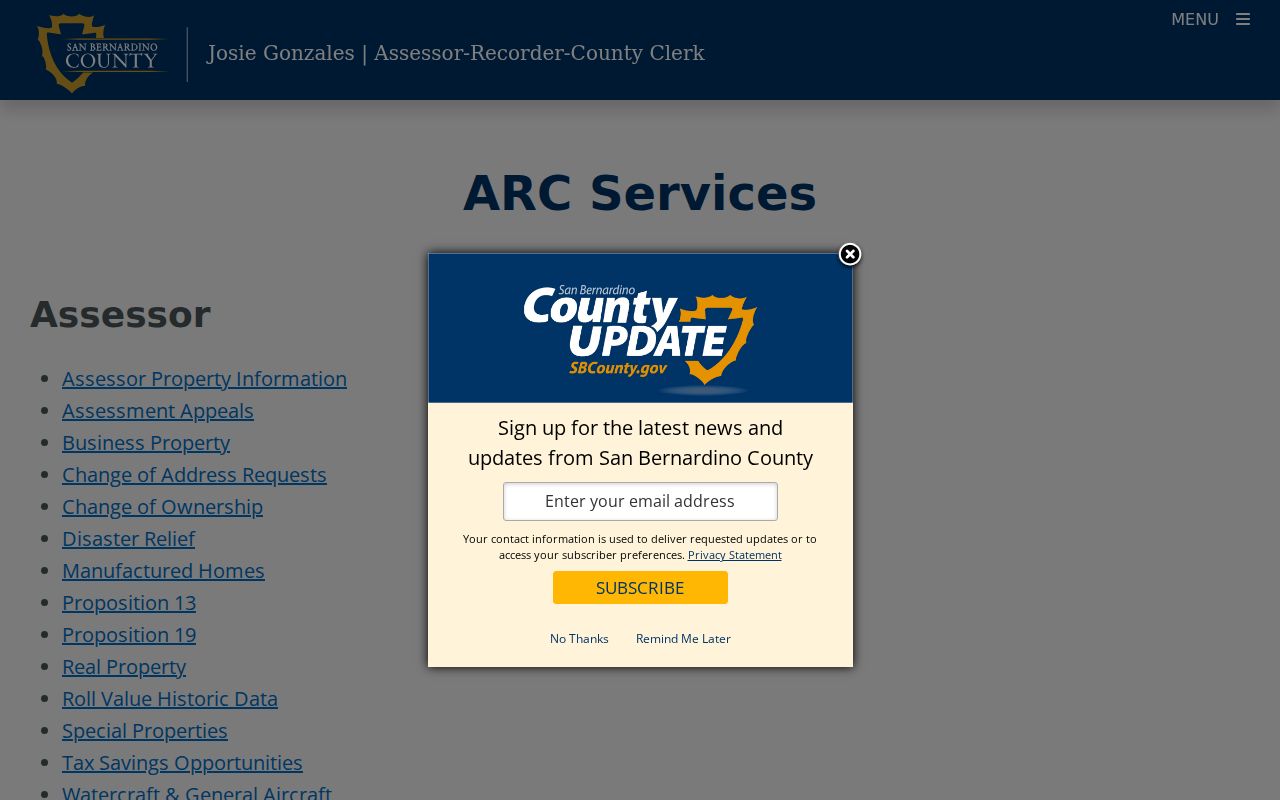
The captured county service screen is a reminder to treat PIMS as an assessment tool. Ownership proof comes from the recorded instrument, and current occupancy needs separate evidence.
The Ontario Recorder Index Has a Boundary
San Bernardino County's public official-records index is useful for a resident trail because it names parties to deeds, deeds of trust, reconveyances, liens, releases, easements, and maps. It is not an address search. The recorder says to begin with PIMS, identify the parcel and likely owner, and then search the party as a grantor or grantee. Grantor means the person or entity conveying an interest. Grantee means the receiving party. Search each spelling and name order.
The open web index is a catalog. It can show document number, recording date, document title, and grantor and grantee names, with book or page references where exposed. It does not display the instrument image to the public. The official service page states a 1925-present index, while a separate property-research guide describes computerized grantor and grantee access as 1958-present and sends earlier work to decade-organized microfilm. That conflict belongs in the research plan. Call Recorder-Clerk Services at 909-387-8306 before treating either cutoff as universal.
Copies are listed at $4 for the first page and $1.50 for each later page, with an additional $1.50 for a certificate under seal. Card orders add 3.5 percent. The research notes a one-to-two-week mail turnaround after receipt. In-person inspection is available at the Hall of Records or the Hesperia High Desert Government Center, and appointments are strongly encouraged. The paid subscriber program is a different access lane from the free catalog.
Note: A recorder index entry points to a recorded document; read the deed or lien before drawing a conclusion about a person or parcel.
Current Ontario Resident Sources, Compared
No current source functions as a complete Ontario residents directory. Each one answers a narrower question, and the strongest result comes from joining two records without treating either as a household roster. The table below keeps those roles separate.
| Source | What it can show | Custodian | Access boundary |
|---|---|---|---|
| PIMS assessment parcel | APN, situs, property facts, assessed values | San Bernardino County Assessor | Free; owner data may be suppressed |
| Recorder party index | Recorded parties, title, date, document number | ARC Recorder | Free index; image by copy or office access |
| My Voter Status | One voter's registration and election details | California Secretary of State | Personal identifying data required |
| City permits and files | Applicants, contractors, work, and address events | City of Ontario | Portal or narrow records request; exemptions apply |
| License and entity files | Professional or business affiliation | California DCA or Secretary of State | Public fields vary; an address of record is not residence |
When the goal shifts from a broad source map to one person, use the Ontario resident lookup path and keep a note of the record's date, role, and custodian. When the clue is an entire street, the APN and map sequence belongs in the Ontario by-street search.
Ontario Voter Records Are Personal
California My Voter Status is often mistaken for a public voter directory. It is a self-service form. The requester supplies first name, last name, date of birth, and a California driver license or identification number or the last four digits of a Social Security number, depending on the system match. San Bernardino County is selected when the current registration is in Ontario. A successful match can return registration status, party preference, polling and ballot information, precinct or district assignments, language preference, and election participation history.
That does not authorize name-browsing on a street. Elections Code sections 2194 and 2188.5 limit voter-file use and protect confidential portions. Driver-license data, Social Security numbers, and signatures are not public. A full voter-file request goes through the elections officials or state regulations and calls for the requester's identity, organization, purpose, geographic scope, delivery choice, and prohibited-use certifications. A qualified file may support an allowed precinct analysis, but it is not a casual neighbor search.
The California voter-status form is the right starting point for a person's own record. A failed match can reflect spelling, a county move, an inactive record, cancellation, confidentiality protection, or a data mismatch.
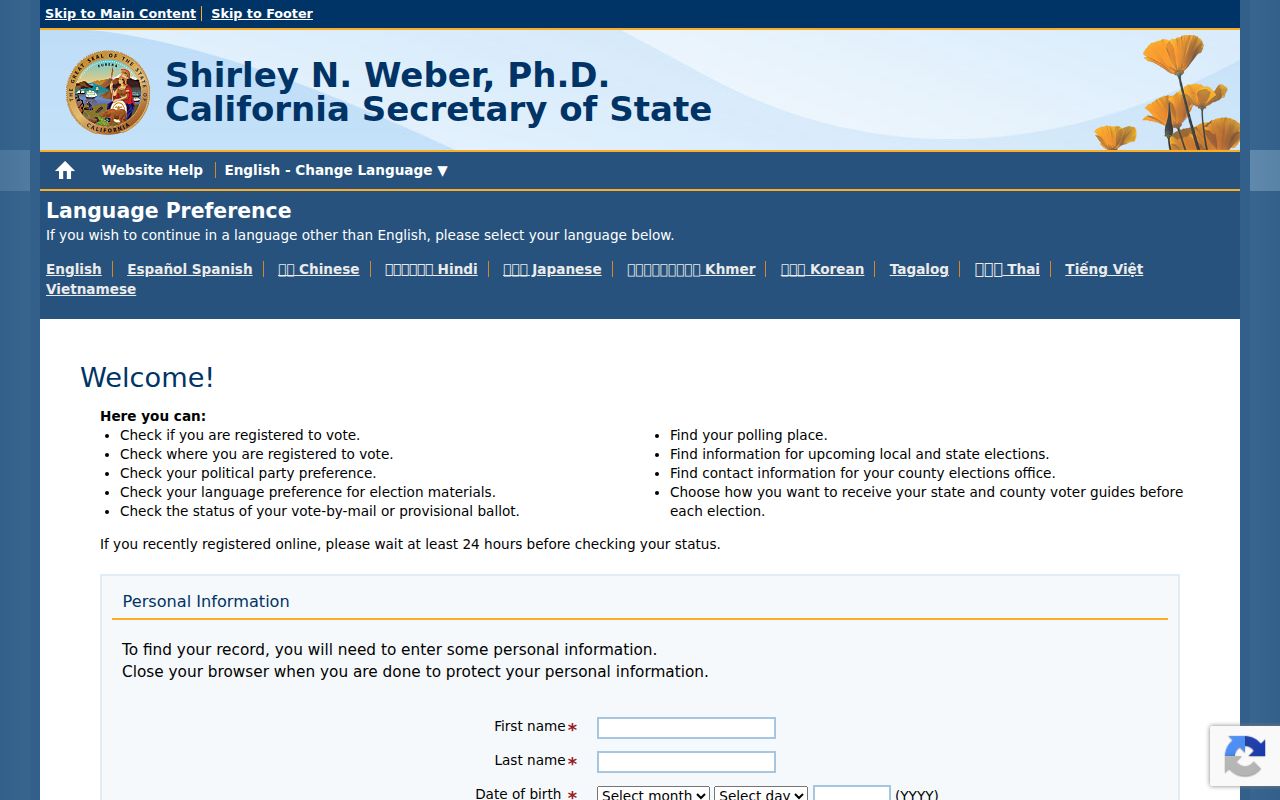
The identifying-data form shown here reinforces the boundary: a residents directory can explain the official route, but it cannot turn a protected voter file into a public block list.
Ontario Vital Records Have Different Rules
Birth, death, marriage, confidential marriage, and divorce records do not share one California opening date. County ARC is usually the practical route for a known San Bernardino County event, while the California Department of Public Health can help when the county is uncertain. The key question is whether the requester qualifies for an authorized certified copy or should order an informational copy. An informational copy carries the record information but is marked so it cannot serve as identity proof.
| Record | Custodian path | Access point | 2026 CDPH fee |
|---|---|---|---|
| Birth | County ARC or CDPH | Authorized copy for eligible requester; informational copy otherwise | $31 |
| Death | County ARC or CDPH | Authorized rules apply; informational copy generally available | $26 |
| Public marriage | County ARC or CDPH | Public certified copy route | $19 |
| Confidential marriage | County of issue or CDPH as allowed | Party or court-authorized access under Family Code section 509 | $19 where available |
| Divorce certificate | CDPH for supported years; court for decree | Case-file rules control the decree | $18 |
Mail requests for an authorized birth or death copy generally require a sworn statement and notarization. CDPH keeps the fee as a search fee even when no record is found. Adoption records and original birth records are sealed except through statutory or court routes. California Vital Records applications should be checked at the time of ordering because processing ranges and forms can change.
Ontario Court Records Need Context
A court party result can confirm that a person or business appears in a case, but it is not a residence record. The San Bernardino Court Access Portal can search by case number or party name, and name mode may expose first, middle, and last fields. A case type filter can include civil, criminal, family, probate, small claims, traffic, and other supported categories. Filing date and court location narrow a common name. Pre-1998 data may be limited.
A public result may show the case number, caption, party roles, filing date, category, location, status, register-of-actions events, hearing dates, and disposition or judgment entries. A docket is the court's running event record. Remote civil document images that qualify for access are listed at $0.50 per page. Criminal, family, juvenile, adoption, sealed, and other sensitive material may be limited to an index, a courthouse terminal, a party, or a court order.
Use the county court case-information gateway for the current route, then request a known file from the clerk if the web index is incomplete. Federal cases use PACER separately; a county search cannot substitute for the federal locator.
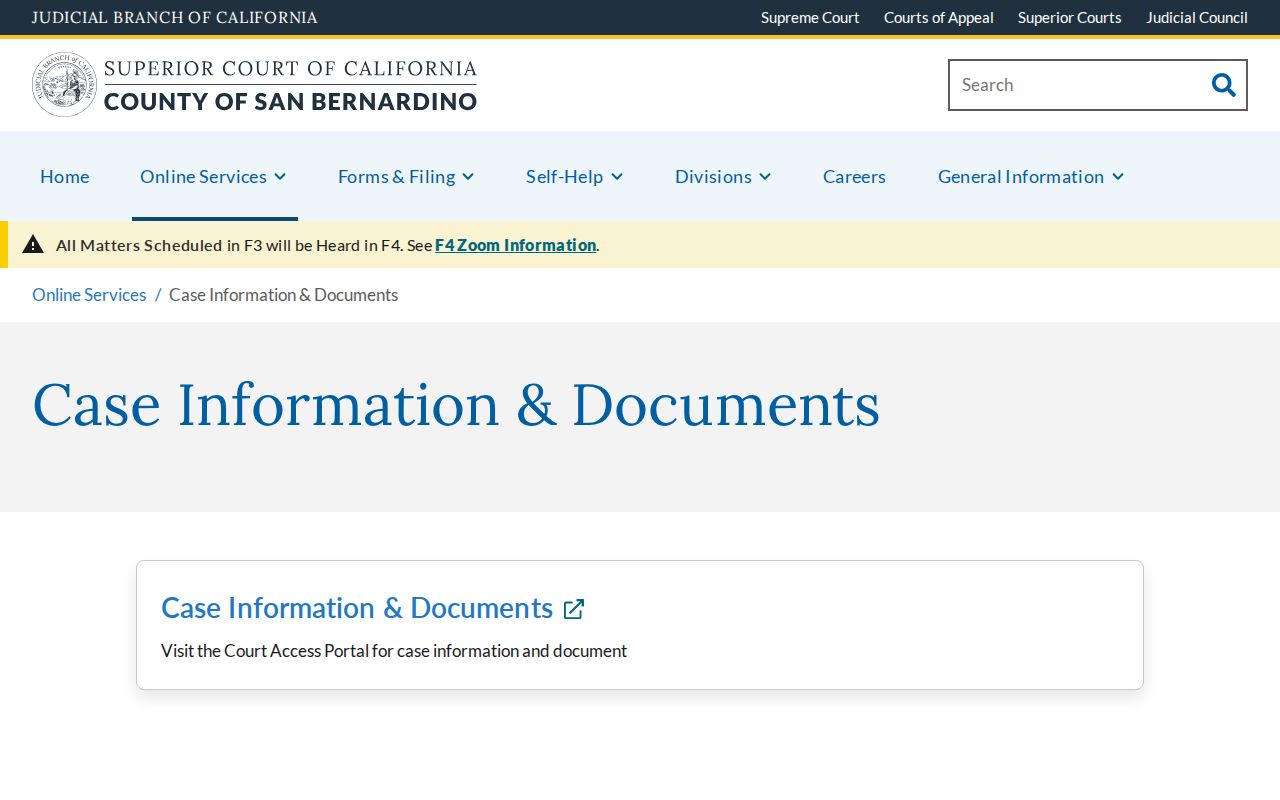
The county court screen belongs in a one-person workflow only after the name has been narrowed by a date, role, address clue, or other independent fact.
Ontario's Library Holds Resident Trails
The Robert E. Ellingwood Model Colony History Room at the Ovitt Family Community Library is the local fallback when a modern portal cannot answer a historical question. It holds city directories, a Master Biography File, newspapers and an online newspaper index, building surveys, maps, historic photographs, yearbooks for Chaffey, Ontario, and Colony schools, and manuscript collections from families, clubs, organizations, and businesses. Staff specifically invite questions about ancestors, old businesses, classmates, and historic houses.
History Room hours are Monday through Wednesday from 1 to 6, Thursday from 1 to 9, and Friday from 1 to 6. It is closed on weekends. The room is at 215 E. C Street, Ontario, California, and lists 909-395-2206 and LocalHistory@OntarioCA.gov. Off-site collections require at least one day's notice, collection and box numbers, and staff retrieve up to four boxes at a time.
A former classmate trail may start with a yearbook, then move to a newspaper notice, a directory entry, and a current professional or business record. That is a different evidence path from a parcel search. The Model Colony History Room page identifies the local collections and the help available.
Professional-license records can add an official affiliation when a library clue points to a name. The California DCA license search is the matching public route for license fields and discipline information where the board permits disclosure.
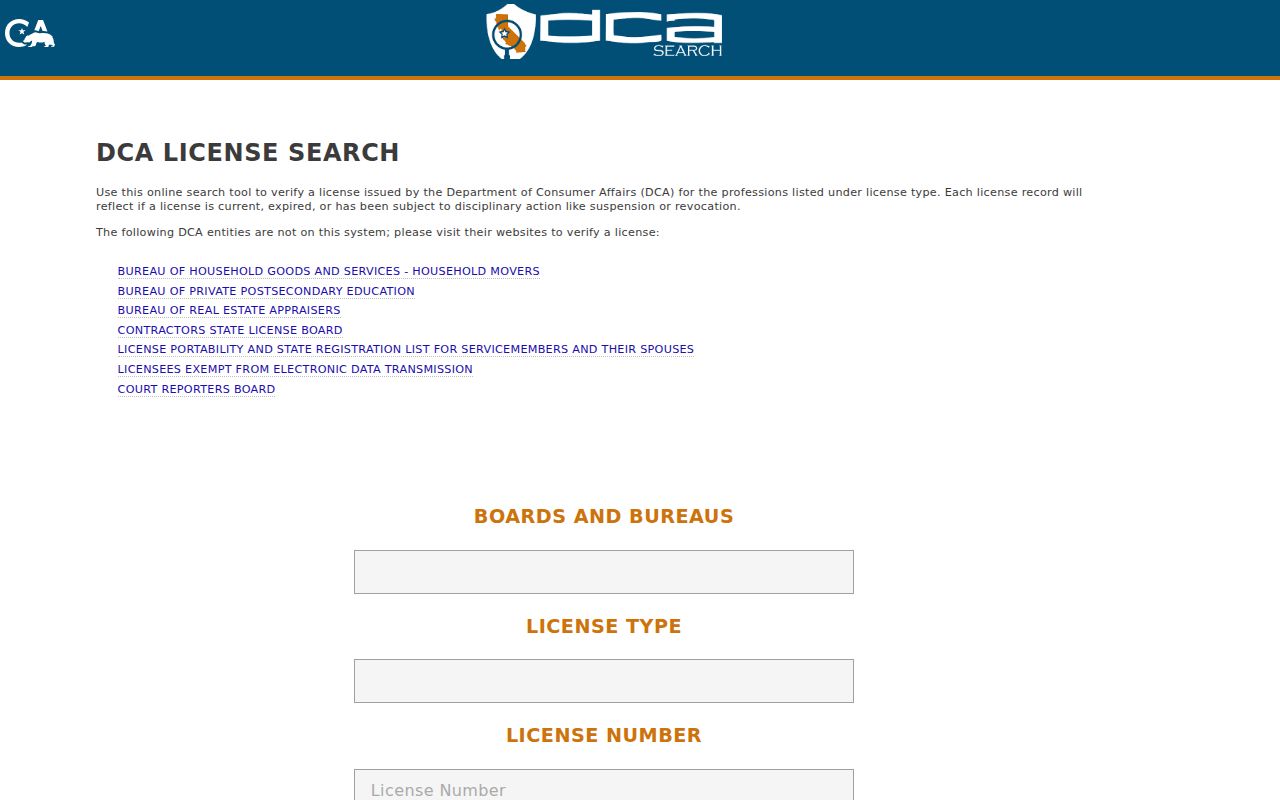
The license search image belongs beside the library clue because a public credential can add dated affiliation without proving residence.
Protect Ontario Records from Error
Names repeat. Ontario's population includes many surnames, compound names, diacritics, and changing name order, so a single hit is only a lead. Build a comparison grid with the exact name and variants, middle initial, approximate age, city, associated people, APN, case number, business or license number, and dates. Require two independent records before treating two entries as one resident. A business agent address or professional address is an address of record, not proof of a home.
| Official source | Strength | What still needs checking |
|---|---|---|
| County parcel or deed | Property link, party role, date | Occupancy and current title context |
| Court index | Party role and case events | Identity, complete file, and sensitive access limits |
| Vital record | Event and relationship evidence | Requester eligibility and certified-copy status |
| Business or license file | Public affiliation and status | Whether the address is residential or only a business contact |
Commercial people-finder services merge public and purchased data, may lag moves or deaths, and often charge for clues that still need source checking. Original custodians are stronger. A correction belongs with ARC, the court clerk, CDPH, a licensing board, or the elections office, not with a directory reference page.
The California bizfile Online search is the matching official route for the entity clue shown below.
California bizfile Online can verify an entity name, status, agent, address, and filings where available. Treat the result as an affiliation clue and compare it with the person's other records.
When Ontario Online Records Stop
Online coverage is a convenience layer, not the beginning of Ontario's records. For deeds before the applicable computerized cutoff, the fallback is the Recorder's main counter, decade-organized microfilm, the County Historical Archives, or a verified genealogy collection. For municipal files, use the City of Ontario's GovQA portal with a department, record type, address or project, date range, and known permit or case number. The California Public Records Act covers identifiable existing records and does not require an agency to invent a new resident list.
CPRA inspection is generally free. The agency ordinarily makes a determination within 10 calendar days and may extend by written notice up to 14 days for unusual circumstances. Direct duplication or statutory electronic-extraction costs can apply. A narrow request is easier to process than a demand for every document containing a person's name.
Ontario's public-records request portal asks for requester or account information, a description of the existing record, an optional department or category, optional attachments, and a delivery or contact preference.
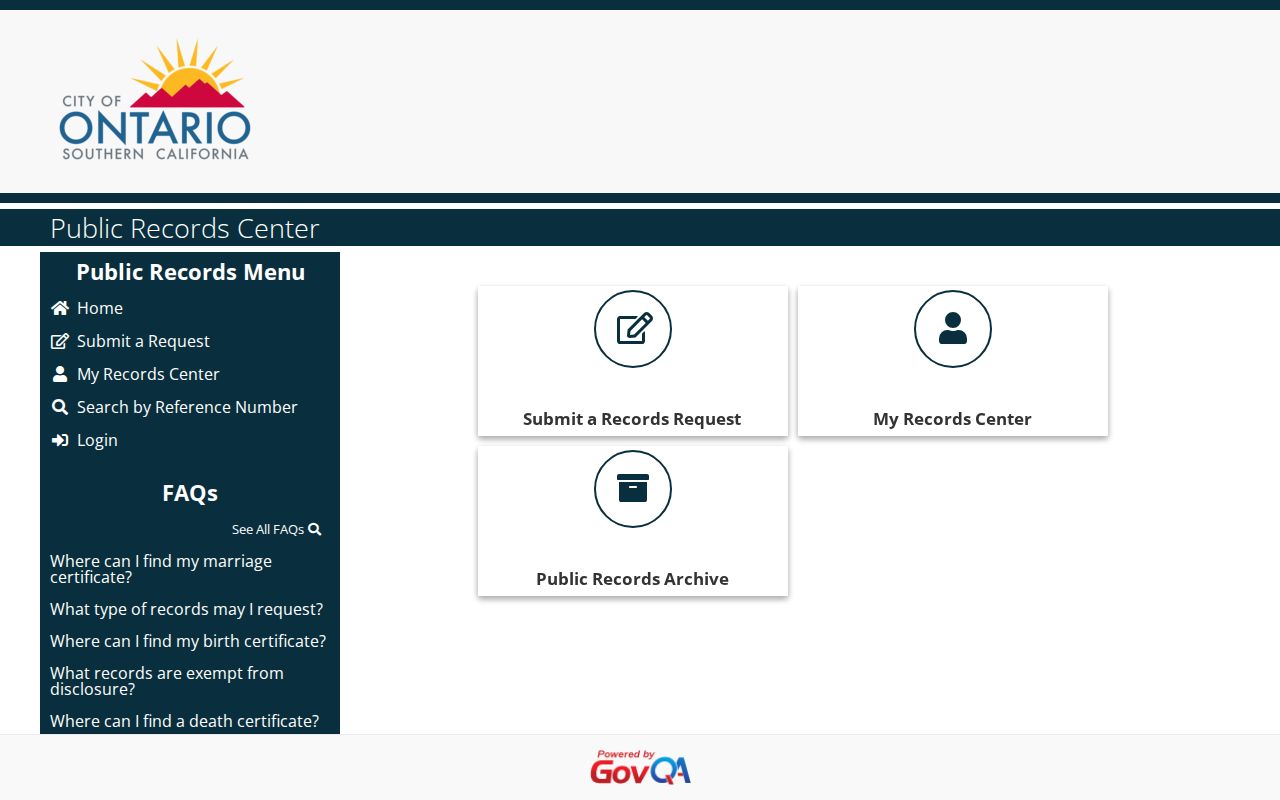
The request screen is the fallback when a city permit, planning file, or other identifiable municipal record is not exposed through a search page. Use the custodian's terms and preserve the response.
Ontario's Earlier Resident Directory Shelf
Historical Ontario resident directories are strongest when treated as dated snapshots. The early bibliography includes the 1898 San Bernardino County Directory with an Ontario section; the 1901 Ontario City Directory; the 1903 Ontario Colony Directory; a 1907 Directory of Pomona with Ontario entries; the 1909-10 Pomona resident and business directory; a 1911 regional directory; and 1928 and 1931 Pomona directories with Ontario sections. The Model Colony History Room does not publish a complete shelf list or exact physical year run, so those dates are a verified starting spine rather than a promise that every edition is on the shelf.
Later reverse or criss-cross directories can move from a street and number to an occupant or business. Pair a directory with the 1907 Sanborn atlas, census schedules through 1950, recorded deeds, building surveys, newspaper notices, and probate. A directory absence can mean a move, death, unlisted entry, a missing edition, or a spelling difference. Record the source, publication year, page, and abbreviation key before making a family-history conclusion.
For the collection-by-collection treatment, use Ontario city directories as the historical shelf. For a current address chain, use by-street records. The Ontario residents directory works best when those time layers remain distinct.
Lawful use. Public records are for personal, lawful research and civic understanding. Do not use an Ontario resident record to stalk, harass, intimidate, or harm another person.